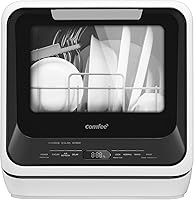
How to Hook Up a Danby Countertop Dishwasher
Hook up a Danby countertop dishwasher by screwing the quick connect adapter onto your faucet aerator threads, snapping on the inlet hose, and clipping the drain hose to the cabinet side. Run a short rinse cycle and check both connections for drips before you load dishes.
On this page (8 sections)
- What comes in the Danby box for the hookup?
- How do you attach the quick connect adapter to the faucet?
- How does the inlet hose snap onto the adapter?
- How do you run the drain hose correctly?
- Where should the Danby sit on the counter?
- How do you check for leaks before the first wash?
- Which settings should you use on the first real load?
- What should you check after the first few cycles?
Here's how to hook up a Danby countertop dishwasher: screw the quick connect adapter onto the faucet, snap on the inlet hose, and route the drain hose above the sink line. Then run a short cycle to check the connections before you load a full basket.
Most people finish in under half an hour with no tools beyond the adapter that ships in the box.
The Danby DDW621WDB arrives with a quick connect faucet adapter, an inlet hose and a drain hose, so the hookup is a plumbing-free job. The tricky part is the drain, not the water supply.
Get that hose height right and the machine runs quietly without backing water into the sink.
What comes in the Danby box for the hookup?
The box includes the dishwasher, an owner's manual, a drain hose, an inlet hose, and a quick connect faucet adapter. That's everything you need for a standard kitchen faucet, so you won't need a plumber or a shutoff valve.
The Danby DDW621WDB is a compact countertop unit that measures 19.69 inches deep, 21.65 inches wide and 17.24 inches high. It weighs 46.3 pounds, so plan for two people to lift it onto the counter.
Its 6 place setting capacity and stainless steel interior suit a small kitchen or a couple.
Because it connects to a tap and drains into the sink, the machine needs no permanent plumbing. That's what makes the hookup simple.
Check that your faucet has removable aerator threads and that an outlet sits within reach of the cord before you start.
How do you attach the quick connect adapter to the faucet?
Unscrew your faucet aerator, screw the adapter onto the exposed threads, and tighten it by hand. Wrap the threads with thread seal tape first if the adapter didn't come with a rubber washer.
Most US kitchen faucets use either 15/16 inch male outside threads or 55/64 inch female inside threads. A dual-thread adapter covers both, so one part fits the majority of sinks.
Screw it on until it seats against the faucet, then hand-tighten only. Over-tightening can split the washer and start a drip.
If your faucet has a pull-down spray head or an unusual aerator size, measure the threads before buying an adapter. The included one fits most standard kitchen faucets but not all of them.
A spare adapter set is cheap insurance and worth keeping in a drawer.
How does the inlet hose snap onto the adapter?
Push the inlet hose connector onto the adapter until it clicks, then tug it gently to confirm the lock. The snap-on coupling is the whole point of the quick connect design, and it should seat with light pressure.
The Danby's inlet hose carries water from the tap to the dishwasher. With the hose attached, turn the faucet on and let water flow for a few seconds.
That flushes any debris out of the line before it reaches the spray arm. A full water flow matters here, because the machine fills on its own schedule and a restricted tap slows the cycle.
Keep the faucet fully open during a wash. The dishwasher draws water in bursts, so a half-open tap can starve it.
When the cycle ends, snap the hose off and the adapter returns to working as a normal faucet aerator.
How do you run the drain hose correctly?
Clip the drain hose so it rises above the dishwasher's drain outlet and empties into the sink. A hose that lies flat or dips below the machine traps water and can back up into the cabinet.
This is the step people skip. The drain works by gravity and a small pump, and the hose needs a high loop before it reaches the sink.
Use the clip or bracket that came with the unit, or a hook-and-loop strap on the cabinet side. The peak of the loop should sit above the drain outlet on the back of the dishwasher.
Run the end of the hose into the sink basin rather than down the drain. That way you can see the water leaving and spot a kink before it floods the counter.
For more on how the water exits, see how does a countertop dishwasher drain.
If the hose is too short for your sink layout, an 8 ft replacement kit reaches further. The Garsoo kit includes a standard faucet adapter, inlet and outlet hoses, and sealing tape.
Check the connector sizes against your unit before buying: its large connector has a 61/64 inch internal thread and the small one 23/32 inch.
Where should the Danby sit on the counter?
Set the dishwasher on a flat, dry surface close enough to the sink that the hoses reach without stretching. It needs clearance above for the lid and room at the sides so the hoses don't kink against a wall.
The machine is freestanding and designed to fit under most kitchen cabinets. Check the height against your counter and any overhang before sliding it in.
Leave a gap at the back for the hoses to curve without pinching.
If your counter space is tight or the machine sits too low, a small stand raises it to a comfortable loading height. Our guide to the best countertop dishwasher stand covers tables and carts that fit units this size.
Measure the footprint first, since the Danby is about 21.65 inches wide.
Keep the machine away from the stove and out of direct sun. The Danby runs at 52 dB, which is quiet enough for an open kitchen.
A stable, level spot also reduces vibration during the spray cycle.
How do you check for leaks before the first wash?
Run a short cycle with no dishes and watch the faucet adapter and both hose connections. A dry paper towel under each joint shows a drip within minutes.
Turn the tap on, start a rapid cycle, and wait through the fill. Check the adapter at the faucet, the inlet coupling, and the drain hose where it leaves the machine.
Tighten anything that weeps and reseat the washer if a joint keeps leaking. Shut off the tap before you reach in to adjust a fitting.
The Danby's 6 wash cycles range from Intensive to Soak, and the LED display shows which one you picked. A rapid cycle is enough for this leak check.
Once everything stays dry, load the basket and run a normal wash.
Which settings should you use on the first real load?
Start with the Normal cycle and the standard detergent dose, then adjust from there. The Danby offers Intensive, Normal, Economy, Rapid, Glass and Soak cycles, plus a delay start of 2, 4, 6 or 8 hours.
Use Intensive for pots and baked-on food, Glass for delicate items, and Rapid for lightly soiled dishes. Soak handles stuck-on residue before a full wash.
The delay start is handy if you want the machine to run overnight.
Fill the detergent and rinse agent dispensers as the manual directs. Load plates facing the center and keep tall items away from the spray arm.
The redesigned spray arm and filter are meant to reach the load more evenly, so don't crowd the basket.
If you're setting up the appliance for the first time in a new kitchen, the full walkthrough in how to set up a countertop dishwasher covers placement, water and the first cycle in order. Compare other compact models in our roundup of the best countertop dishwasher picks if you haven't bought yet.
What should you check after the first few cycles?
Look for water under the machine, a loose drain clip, and any change in the hose loop. A hookup that works on day one can still shift as the hoses warm up and settle.
Recheck the drain hose height after the first week. The clip can slide if the hose gets bumped, and a low loop is the most common cause of sink backup.
Wipe the filter and check that the adapter on the faucet still turns freely as an aerator.
If the machine stops mid-cycle or leaves dishes wet, confirm the tap was fully open and the drain hose wasn't kinked. Those two issues account for most early problems with a countertop unit.
A steady drip at the faucet usually means a worn washer rather than a faulty dishwasher.
When you're ready to make the hookup permanent for the season, leave the adapter on the faucet and store the hoses coiled and dry. That keeps the snap-on coupling clean and makes the next cycle a one-minute job.
If you plan to run the machine daily, a stand and a longer hose set make the routine easier to live with.
Hooking up a Danby countertop dishwasher comes down to three connections: the adapter on the faucet, the inlet hose snapped onto it, and the drain hose looped high into the sink. Do those in order, check for drips on a short cycle, and the machine is ready for dishes.
Frequently asked questions
Can I leave the quick connect attached to my faucet all the time?
Yes, the adapter can stay on the faucet between washes and works as a normal aerator when the hose is off. Many kitchens leave it in place and only snap the inlet hose on for a cycle.
Does the Danby countertop dishwasher need a plumber?
No. It connects to a standard kitchen faucet with the included quick connect adapter and drains into the sink.
You need a faucet with removable aerator threads, a nearby outlet, and a flat counter spot.
Why is water backing up into the sink during a cycle?
The drain hose is probably lying flat or dipping below the sink rim. Clip it to the cabinet wall so it rises above the dishwasher's drain outlet, then water flows into the sink instead of pooling.
What do I do if the faucet connection leaks?
Shut off the tap, remove the adapter, and reseat the rubber washer. Also check that the threads match: most US faucets use 15/16 inch male or 55/64 inch female threads.
Can I use an extension cord for a countertop dishwasher?
It's better to plug the dishwasher straight into a grounded wall outlet near the sink. A long extension cord adds a trip and water risk, and the manual for your unit lists its electrical requirements.
How long does the first hookup take?
Most people finish in about 15 to 30 minutes, including seating the adapter and checking for leaks. The first wash cycle takes longer while the unit fills and heats.