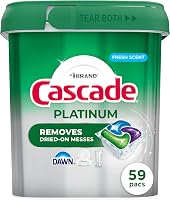
Dishwasher Salt vs Rinse Aid: What a Countertop Model Needs (October 2026)
Dishwasher salt softens water in models with a built-in softener, while rinse aid helps dishes dry and reduces spots. A countertop dishwasher only needs salt if its manual and settings show it has a water softener.
On this page (6 sections)
- Dishwasher salt vs rinse aid: what does each do?
- How can you tell if a countertop dishwasher needs salt?
- Where do you put rinse aid in a countertop dishwasher?
- What should you use if dishes have spots or stay wet?
- Can you use table salt instead of dishwasher salt?
- What is the simple rule for salt and rinse aid?
Dishwasher salt softens water in models with a built-in softener, while rinse aid helps dishes dry and reduces spots. Your countertop dishwasher needs salt only if it has a water-softening system, and it needs rinse aid only if its manual provides for it.
The products solve different problems. Salt supports the softener; rinse aid helps water drain from dish surfaces during the final rinse, which can reduce wet dishes and spots.
Don't add either product based on a guess. Check your model's manual for a salt reservoir, softener settings and a rinse-aid compartment.
Dishwasher salt vs rinse aid: what does each do?
Salt is for the dishwasher's water softener; rinse aid is for drying and spot reduction. Neither one is a replacement for detergent, which cleans food from dishes.
A softener treats hard water inside a compatible machine. Hard water can leave mineral deposits and marks, so a dishwasher with a softener may use salt as the system's supply.
Rinse aid works during rinsing. It helps water run off dishes, which can leave fewer droplets to dry into spots.
Does dishwasher salt clean dishes?
No, dishwasher salt does not wash away food. It supports a water-softening system, so you still need detergent for each wash as directed by the manual.
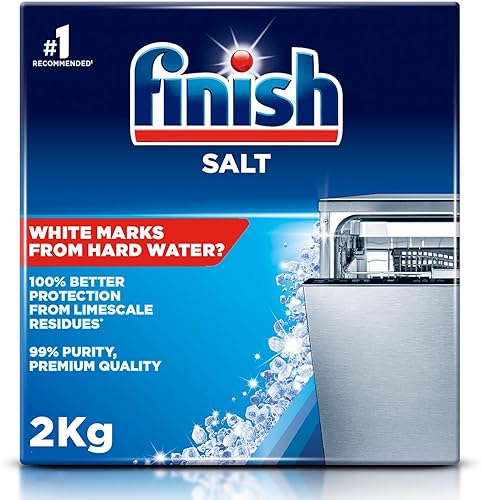
Use salt made for dishwashers when your model calls for it. Finish Dishwasher Salt is made to soften water and help prevent limescale and watermarks.
Finish recommends it over table salt, which may contain contaminants that can damage a dishwasher.
Does rinse aid replace detergent?
No, rinse aid supports drying and can reduce water spots, but it is not the wash detergent. Keep using the detergent type and amount approved for your countertop dishwasher.
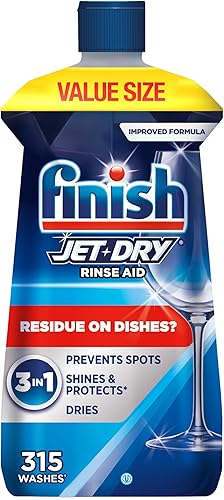
Finish Jet-Dry Rinse Aid is intended for a rinse-aid compartment. Finish says it enhances drying and reduces spots, so it may help if dishes come out wet after a cycle.
How can you tell if a countertop dishwasher needs salt?
Look for a built-in water softener and salt instructions in the exact model's manual. A countertop size, water tank or faucet hose doesn't tell you whether the machine takes salt.
The manual should identify the softener, any salt reservoir, and the steps to choose or adjust a setting. If those instructions aren't present, don't pour salt into the machine or another compartment.
Hard water may cause white marks or scale, as explained in our guide to hard-water problems in dishwashers. But those symptoms alone don't prove your model has a softener or that adding salt is the right fix.
Some countertop dishwashers have a softener. The HAVA Countertop Dishwasher With Water Softener includes a softener setting based on water hardness, and the AIRMSEN Large Slim Countertop Dishwasher has an integrated softener.
Follow the manual for salt type, refill steps and settings. Don't assume that all models from one brand share the same setup.
Where do you put rinse aid in a countertop dishwasher?
Use the labeled rinse-aid compartment if your countertop model has one. Check the manual for its location and refill instructions because compact machines can use different layouts.
Keep rinse aid out of the detergent dispenser, water tank and other openings. If the machine has no rinse-aid compartment, don't improvise by pouring rinse aid into the wash chamber.
Our guide to setting up a countertop dishwasher explains why it's useful to check the manual and identify the machine's openings before the first cycle. Follow those same instructions when you refill any care product.
Finish Jet-Dry is designed for a dishwasher's rinse-aid compartment. Finish recommends refilling about once a month, but the right refill timing for your machine depends on its compartment and use.
What should you use if dishes have spots or stay wet?
Start with the symptom and your manual: rinse aid may help with wet dishes and spots, while salt matters only if the machine has a softener. Check detergent use and loading too.
If dishes look wet, confirm that the cycle includes the drying option you expect and that the rinse-aid compartment is filled as directed. Not every countertop dishwasher has a separate rinse-aid supply.
If white marks or residue keep appearing, clean the machine as its manual directs and review the detergent guidance. Our articles on dishwasher detergent for hard water and cleaning a countertop dishwasher cover those next steps.
Don't add extra salt or rinse aid to chase a problem without checking the instructions. Too much or incorrectly placed product can leave residue or interfere with a cycle.
Can you use table salt instead of dishwasher salt?
Use dishwasher salt when the manual calls for salt, not ordinary table salt. Finish recommends its dishwasher salt over table salt because table salt may contain contaminants that can damage the machine.
Use the type and amount specified for your model. A softener system is built for its own refill procedure, so don't substitute a different product or pour salt into the tub unless the manual says to.
What is the simple rule for salt and rinse aid?
Choose salt only for a countertop dishwasher with a softener, and rinse aid only for a model with a rinse-aid compartment. Check the exact manual before filling either one.
Salt supports water softening; rinse aid helps drying and spot reduction. For more context on countertop and tabletop dishwashers, see how these compact machines differ and what to confirm before you set one up.
Frequently asked questions
Do countertop dishwashers need dishwasher salt?
Only countertop dishwashers with a built-in water softener need dishwasher salt, and you should follow the model's manual for filling and settings. A tank or faucet connection alone doesn't mean the machine has a softener.
If the manual has no salt reservoir or softener instructions, use the recommended detergent instead.
Can you use rinse aid in a countertop dishwasher?
Yes, if the countertop dishwasher has a rinse-aid compartment and its manual allows rinse aid. Add it to that compartment, not the detergent dispenser or water tank.
If the machine has no compartment, don't pour rinse aid into another opening; check its manual for approved drying options.
Where do you put rinse aid in a countertop dishwasher?
Pour rinse aid into the labeled rinse-aid compartment, if your countertop model has one. The location and refill steps vary, so use the manual rather than guessing from a full-size dishwasher.
Keep detergent in its own dispenser and never mix the two products in one compartment.
Can dishwasher salt replace rinse aid?
No. Dishwasher salt supports the water-softening system in compatible models, while rinse aid helps drying and reduces water spots.
They do different jobs, and neither replaces dishwasher detergent.
Some models may use salt, rinse aid, both or neither, depending on their design and the maker's instructions.